Recycling and Sustainability — London House Clearance
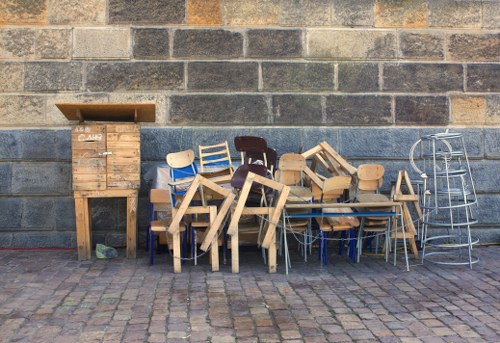 Our mission at London house clearance is simple: to divert as much material as possible from landfill while delivering practical, sensitive clearance services across the city. We have set a formal recycling percentage target of 90% (by weight) for all standard domestic clearances, emphasising repair, reuse and responsible recycling ahead of disposal. This target is monitored on every job and is central to our approach to sustainable house clearance London-wide. We believe every item has a future.
We focus on reuse first and recycling second. The kinds of material streams we prioritise include furniture refurbishment, textiles and clothing, books and paper, metals, wood and, where applicable, WEEE (Waste Electrical and Electronic Equipment). To make that practical we maintain relationships with local reuse hubs and borough-run facilities to ensure maximum recovery. Below are common recycling activities we coordinate:
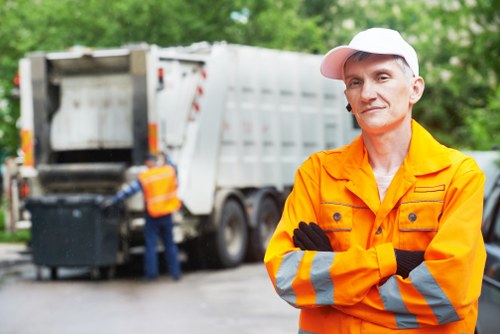
- Collection and onward supply of reusable furniture to charities and social projects
- Segregation and transfer of appliances for WEEE processing
- Textiles sorted for reuse or specialised textile recycling
- Paper, card and mixed containers directed to council recycling streams
Working with London boroughs and local transfer stations
House clearance London requires an understanding of how each borough approaches waste separation. Many London boroughs operate separate collections and civic amenity sites for paper & card, glass, rigid plastics, food waste and textile banks. We align our sorting practices with these local systems so recovered materials can join the right stream — for example, sending segregated paper and card to borough recycling centres and diverting bulky items to transfer stations and civic amenity sites managed by local authorities.
 Our daily routes include regular drop-offs at local transfer stations and household waste recycling centres across the capital, and we work closely with civic amenity sites in boroughs such as Camden, Croydon and Hackney to ensure bulky or mixed loads are processed correctly. London clearance services that ignore these local protocols risk contamination and lower recycling rates; our teams follow borough-specific sorting rules to protect recovery rates.
We also manage specialist streams: refrigerators and freezers are handled with refrigerant-competent contractors, mattresses are sent to accredited reprocessors where possible, and hazardous items are segregated and transferred only to licensed facilities for safe treatment. Compliance and care are as important as recovery.
Partnerships with charities and community groups
Partnership working is the backbone of our reuse strategy. We partner with established organisations and local not-for-profits to give items a second life. These partnerships include donation routes to charities that accept furniture, clothing and household goods, and to social enterprises that run refurbishment workshops and provide employment opportunities. Strong links with local charities make our London House Clearance operations genuinely circular.
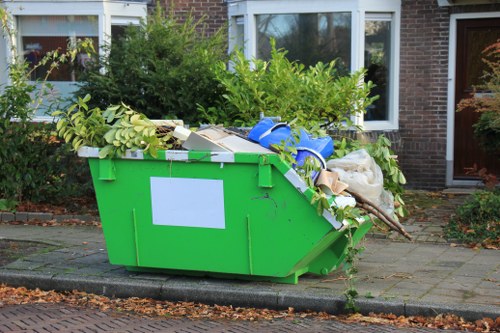 We work with a mix of national and local charities, collaborating with community-focused organisations, furniture reuse networks and specialists in electronic reuse. Items that are repairable are collected and delivered to partner workshops where skilled teams restore pieces for resale or direct community allocation. This approach increases reuse rates and reduces the overall carbon footprint of each clearance.
 Our logistics are designed to be low carbon: we operate a growing fleet of low-emission vans including hybrid and fully electric vehicles, plan round optimisation to reduce mileage and make concentrated runs to transfer stations to minimise empty runs. These steps are part of our pledge to reduce transport emissions and support sustainable house clearance in London.
How we measure and report progress — measurement matters. For every job we record weights and destinations for recovered materials so we can calculate a clear recycling percentage. That data is aggregated to track progress against our 90% recycling target and to identify opportunities to increase reuse or improve sorting procedures. We report internally and review partner choices to ensure materials go to the best possible recovery route.
Key activities that support our target include:
- Prioritising donation and reuse before recycling
- Using accredited transfer stations and registered reprocessors
- Operating a low-carbon fleet and optimising routes to reduce emissions
Our commitment to sustainable clearance is practical and measurable. Whether you use professional London clearance services or a specialist house clearance London team, choosing a provider that tracks recycling rates, works with local boroughs and supports charity reuse makes a measurable difference. We aim to lead by example and to support the circular economy across neighbourhoods and boroughs.
We continue to refine our processes to improve diversion rates, expand reuse partnerships and accelerate the transition to a fully low-emission vehicle fleet. London House Clearance remains committed to practical sustainability on every job: fewer items to landfill, more items restored to use, and a lighter environmental footprint for clearances across the city.